
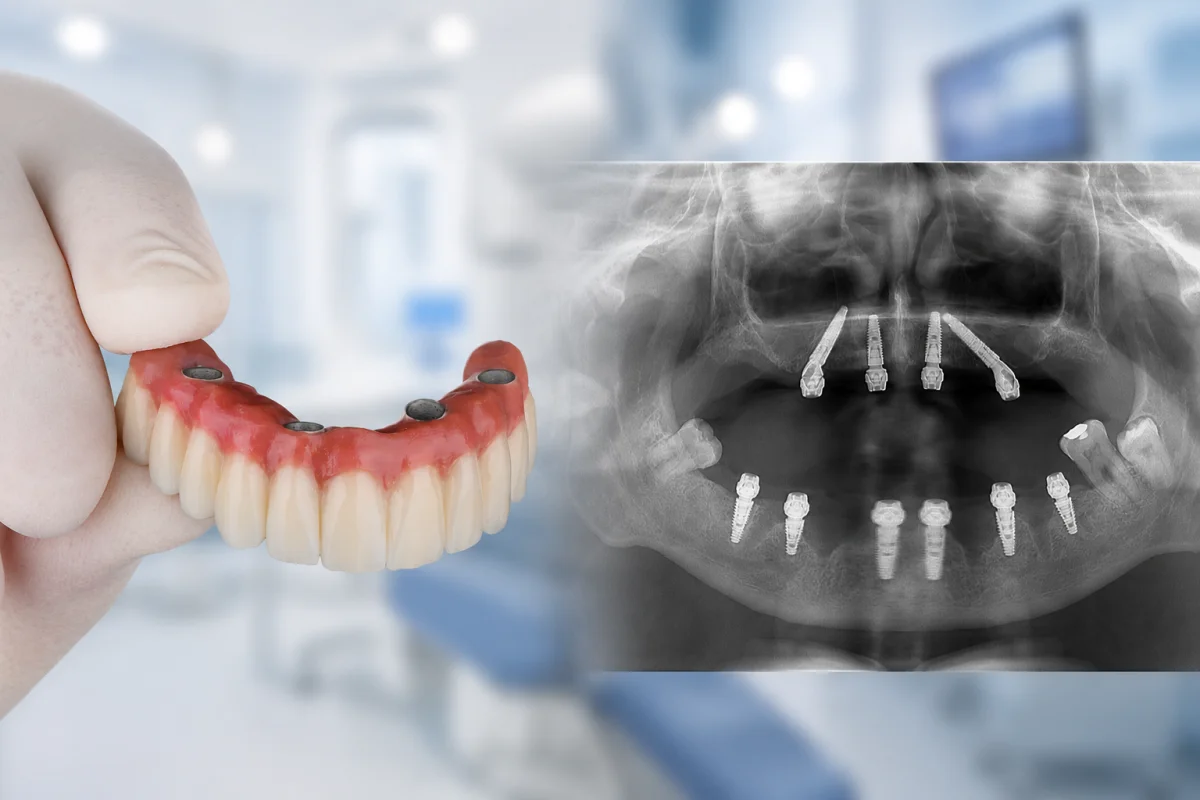
Implantology is a surgical branch of dentistry that includes a range of procedures performed to improve overall health, as tooth loss can have a significant psychological impact on patients.
WHAT IS A DENTAL IMPLANT?
A dental implant is a cylindrical screw made of a titanium alloy that is surgically placed into the jawbone, where it serves as a replacement for a missing tooth root. The implant is completely biocompatible, meaning the body does not recognize it as a foreign object.
Some patients are concerned that the implant may “not integrate in their case,” but this fear is unfounded when a proper clinical protocol is followed and a high-quality implant system is used.
IMPLANT PLACEMENT PROCEDURE
The first step is the analysis of a 3D CBCT scan, which is used to precisely evaluate the quality and dimensions of the jawbone. Adequate bone volume is essential to ensure proper support for the implant and future functional loading.
The surgical placement of a dental implant is a routine, minimally invasive procedure performed under local anesthesia. The placement of a single implant takes approximately 15 minutes. After the procedure, the patient receives instructions regarding oral hygiene and diet. Antibiotic therapy, as well as pain and swelling management medication, are prescribed.
Patients also receive an official manufacturer certificate guaranteeing the origin and quality of the implant system used.
The body’s response to implant placement is usually mild, with minimal or no complications. The healing period that follows is called osseointegration.
IMPLANT EXPOSURE (SECOND STAGE SURGERY)
After the osseointegration process is complete, a procedure called implant exposure is performed. The cover screw is removed and replaced with a healing abutment (“gingiva former”), which helps shape the gum tissue for a natural emergence profile of the future crown. An impression is then taken, based on which the final crown is fabricated.
AM I A CANDIDATE FOR DENTAL IMPLANTS?
If you are missing one or more teeth, you are generally a candidate for dental implants. Today, almost every patient can be considered a candidate, as absolute contraindications do not exist.
Relative contraindications include certain health conditions such as diabetes, systemic diseases, and patients undergoing radiotherapy. Smoking is also a factor that may negatively affect the healing process.
MISSING A SINGLE TOOTH?
After losing a single tooth, adjacent teeth tend to shift and tilt into the empty space. In such cases, the ideal solution is the placement of an implant at the site of the missing tooth. This approach preserves the adjacent healthy teeth by avoiding the need for grinding them, which would otherwise be required for a dental bridge.
WHICH IMPLANT IS THE BEST?
With the development of implantology as a surgical branch, the implant industry has also evolved, and today many implant systems are available.
In our clinic, we have been using the premium implant system by the Swiss manufacturer STRAUMANN for many years. In addition, we also use the NEODENT implant system, which is part of the Straumann Group.


DENTURE SUPPORTED BY LOCATOR ATTACHMENTS
Patients who have worn complete dentures for many years often experience additional bone loss because dentures exert continuous pressure on the gums and underlying bone. As a result, there may sometimes be insufficient bone volume to perform All-on-4 or All-on-6 procedures, particularly in the lower jaw.
In such cases, the most common solution is the placement of two dental implants in the lower jaw. These implants support locator attachments, which allow the denture to securely "snap into place" and become firmly stabilized.
A denture retained by locator attachments provides significantly improved stability and comfort, especially during chewing, resulting in a much better quality of life for the patient.